


Taş Tepeler: Turkey’s 12,000-Year-Old Sites Rewriting Human History – A Complete Visitor’s Guide to Göbekli Tepe, Karahan Tepe, Sayburç & Harran

Aug 9
11 min read
Updated: Aug 11

In the sun-baked plains and dramatic limestone hills of southeastern Turkey lies one of the most extraordinary and important archaeological landscapes anywhere on Earth: the Taş Tepeler, or “Stone Hills.”
Centred around the city of Şanlıurfa (often called Urfa), this cluster of Neolithic sites is fundamentally changing our understanding of human history. Here, more than 11,000 to 12,600 years ago — long before the invention of agriculture, pottery, or permanent villages as we know them — communities of hunter-gatherers created monumental architecture, intricate symbolic art, and complex ritual practices.
Sites such as Göbekli Tepe, Karahan Tepe, and Sayburç contain the world’s oldest known temple-like structures, the earliest narrative art ever discovered, evidence of large-scale communal feasting, and haunting clues about death rituals and ancestor veneration. Çakmaktepe, one of the earliest sites in the Taş Tepeler group, adds further depth with its bedrock-carved circular houses, large communal buildings, and striking deposits of deliberately placed animal skulls. The region also includes the historic layers of Harran, with its biblical connections, moon-god temples, Roman battlefields, and iconic beehive houses.
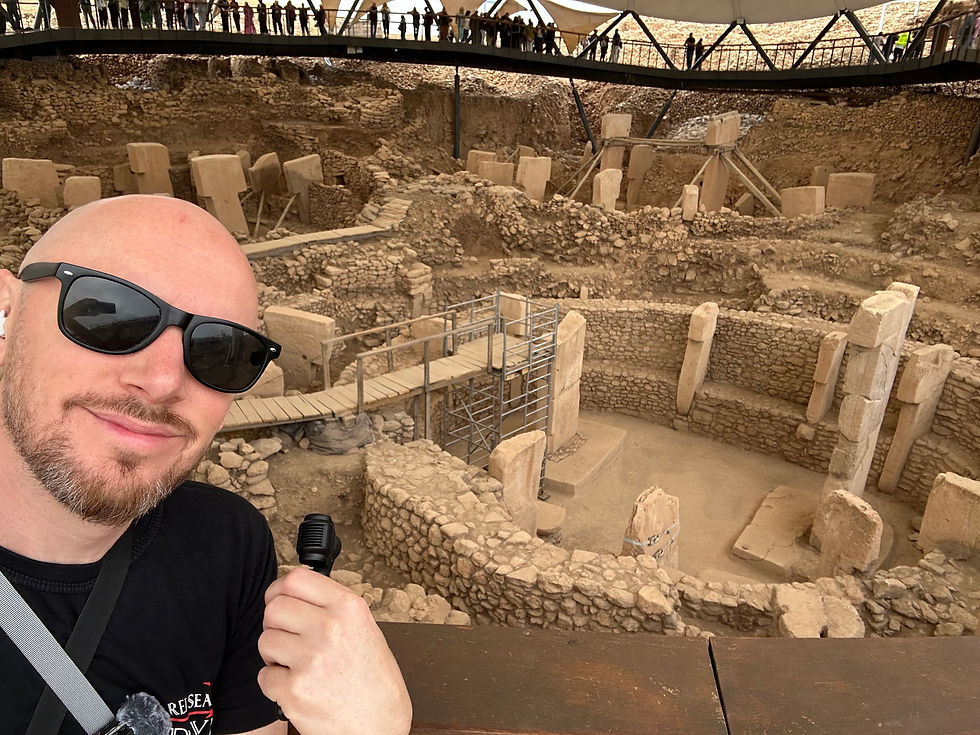
These discoveries raise profound questions: Did ritual and shared belief help spark the Neolithic revolution? How quickly did complex society emerge after the Younger Dryas climate catastrophe? And as tourism grows rapidly, how do we balance public access and economic benefits with the urgent need for careful, science-led excavation and long-term preservation?
This comprehensive guide draws on extensive on-the-ground exploration of the region. It covers the deep historical and scientific significance of the Taş Tepeler sites, provides a detailed practical plan for visiting in 2026 (including transport, accommodation, itineraries, and what to expect), examines the real controversies around development and priorities, and offers ways to experience these places responsibly.
The questions raised by Taş Tepeler do not exist in isolation. Across the Mediterranean, later but still extraordinary megalithic landscapes — most notably the wider group of Maltese temples — continue the same conversation about ritual, cooperation, and the deep human impulse to build monumental sacred spaces. While the Turkish sites pre-date agriculture by millennia, the Maltese complexes (built roughly 3600–2500 BC) show how sophisticated temple-building traditions persisted and evolved once farming societies were established. Visiting both regions side-by-side in one’s mind (or, ideally, in person) reveals a longer arc of human creativity than either landscape alone can show.
The Profound Meaning of Taş Tepeler to Human Knowledge
For decades, mainstream archaeology held that monumental construction, organised religion, and complex symbolic systems only appeared after humans transitioned to farming and settled village life around 10,000–9,000 years ago. The Taş Tepeler sites have upended that assumption.
Göbekli Tepe (c. 9600–8000 BCE) remains the most famous. Its massive T-shaped limestone pillars, some weighing up to 10–20 tonnes, were carved with animals, birds, and abstract symbols and arranged in circular enclosures. Many were deliberately buried after use. The site demonstrates that hunter-gatherers were capable of extraordinary levels of planning, cooperation, and artistic expression long before agriculture.
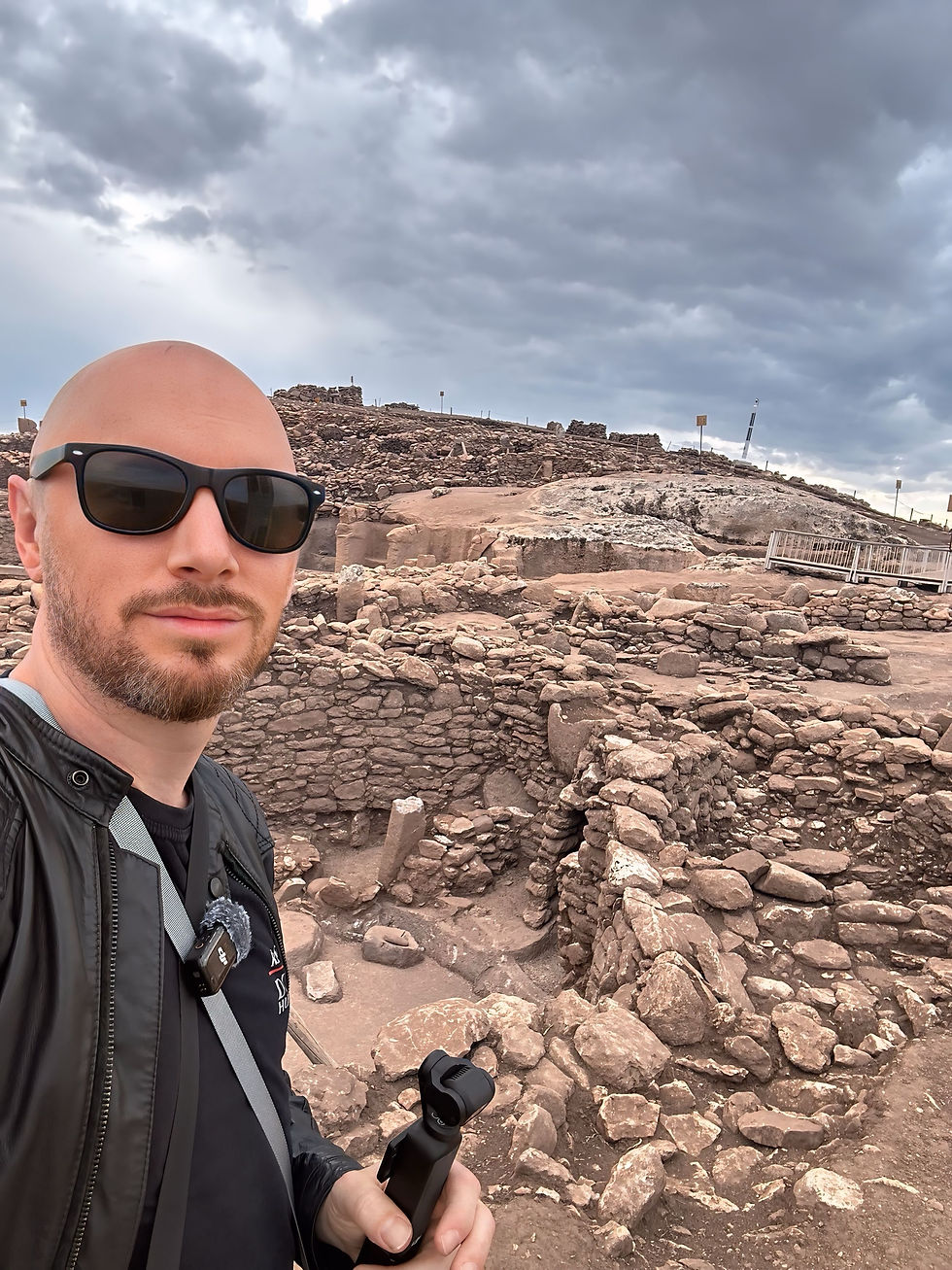
Karahan Tepe, located in the remote Tek Tek Mountains, is revealing even earlier or parallel developments. Recent 2025 discoveries include a striking T-shaped pillar bearing one of the earliest known carved human faces — deep-set eyes, strong nose, and defined jaw — suggesting the pillars may have represented ancestors or supernatural beings. The site features large circular structures, a bedrock-carved space with possible ritual channels, and a powerful seated anthropomorphic statue. Its landscape feels almost otherworldly, adding to the sense of encountering something profoundly ancient.
Sayburç pushes the timeline even further back. At approximately 12,600 years old, it has produced the world’s earliest known narrative artwork: a powerful 3.7-metre-long carved relief depicting humans interacting with dangerous animals in a connected story. Archaeologists have also uncovered human bones from secondary burials — some burned and defleshed — carefully placed in niches and walls of communal buildings. A particularly haunting 2025 find is a human bust with its mouth stitched shut and ribs prominently carved, widely interpreted as relating to death rituals and ancestor veneration. Chemical traces in the buildings point to large-scale feasting and the production of what may be some of the earliest proto-beer. The site appeared remarkably soon after the Younger Dryas, a period of abrupt global cooling that ended around 11,700 years ago.
Çakmaktepe, situated on the limestone plateau west of the Harran Plain, belongs to the earliest phase of the Pre-Pottery Neolithic in the region (broadly 10,000–9,500 BC and possibly earlier). Excavations have revealed around fifty circular residential buildings, mostly 3–5 metres across, carefully carved into the bedrock. A large communal structure approximately 16 metres in diameter has also been uncovered. Inside certain special buildings, archaeologists found concentrations of deliberately placed and burned animal skulls — particularly gazelle, but also cattle, sheep and equids — arranged against the walls. These deposits point to structured ritual or symbolic behaviour at a very early stage of settled life. Because the site remains heavily restricted and is under military oversight in places, public access is extremely limited, making the scientific findings all the more significant for understanding the very beginning of the Taş Tepeler cultural landscape.

Taken together, these findings suggest that ritual, storytelling, communal feasting, and shared symbolic systems may have been powerful social forces that helped bind communities and potentially accelerated the shift toward more settled ways of life — possibly even preceding or driving the full adoption of agriculture.
The implications are enormous. They challenge linear narratives of “progress” from simple hunter-gatherers to complex civilisation and fuel ongoing debates about the speed and drivers of cultural change in the early Holocene. They also connect to broader discussions about how humans respond to environmental upheaval and the deep roots of religious and social behaviour.
A useful parallel — and contrast — appears thousands of years later and hundreds of kilometres to the west at the Tarxien Temples on the island of Malta. Built between roughly 3600 and 2500 BC by fully agricultural communities, Tarxien is the most elaborately decorated of Malta’s UNESCO-listed megalithic temples. Its four interconnected structures feature intricate spiral carvings, processions of animals in low relief, altars associated with sacrifice and feasting, and the lower half of a colossal statue (once standing more than two metres high) that has long been linked to fertility and regenerative symbolism. Like the Taş Tepeler enclosures, the Maltese temples show extraordinary investment of labour, shared ritual practice, and a sophisticated symbolic language. The key difference is chronological and economic: by the time Tarxien was constructed, pottery, domesticated animals, and settled farming were already established. Yet the same fundamental questions resurface — how and why did communities pour such effort into monumental sacred architecture, and what does the eventual abandonment of these sites (followed by cultural discontinuity) tell us about social resilience and collapse? Standing at Tarxien after visiting Göbekli Tepe or Karahan Tepe makes the longer Mediterranean story of early ritual architecture feel continuous rather than isolated.
The Maltese temples were once widely regarded as the world’s oldest free-standing stone architecture until the radiocarbon dates from Göbekli Tepe pushed that threshold back by roughly six millennia. The comparison remains valuable precisely because the two traditions developed under different conditions. The Taş Tepeler sites prove that complex ritual construction did not require farming; Tarxien and its sister temples (Ġgantija, Ħaġar Qim, Mnajdra) demonstrate how that impulse continued and flourished once agriculture was in place. Both landscapes force us to rethink assumptions about when “civilisation” begins and what drives human beings to build in stone on a monumental scale.
How to Visit the Taş Tepeler Region Responsibly - Practical Guide
Best base: Şanlıurfa. The city offers the ideal combination of comfort, atmosphere, and proximity. Göbekli Tepe lies just 15–18 km (20–30 minutes’ drive) northeast. Karahan Tepe is further out (roughly 45–60 minutes from the city centre), while Harran and Sayburç are accessible as day trips or half-day excursions. The outstanding Şanlıurfa Archaeology Museum provides essential context and houses many original artefacts and reconstructions.
Getting to Şanlıurfa: Fly into Şanlıurfa GAP Airport (GNY). There are regular domestic flights from Istanbul (about 2 hours), Ankara, and Izmir. From the airport to the city centre, allow 35–45 minutes by taxi or pre-arranged hotel transfer. Taxis are readily available; agree on a fare or use a meter where possible.
The best time to visit is March–May and September–November, which offer the most comfortable temperatures and good light for photography. Summer (June–August) regularly exceeds 40°C with minimal shade at the sites — visit at opening time and carry plenty of water if you go then. Winter is quieter but can be cold and occasionally rainy.
Transport options on the ground
Rental car: Highly recommended for flexibility, especially if visiting Karahan Tepe and combining sites. Roads are generally good and well-signposted.
Private driver or half-day tour: Many hotels can arrange this for around $30–50 USD for a half day. Excellent for those who prefer not to drive.
Taxi: Feasible for Göbekli Tepe from the city centre (20–30 minutes). Negotiate or use metered taxis.
Guided tours: Widely available and worthwhile for a deeper context, especially if combining multiple sites.
Public transport: Limited for the archaeological sites; a car or driver is far more practical.
Where to stay
Boutique and character hotels in the older parts of Şanlıurfa offer the best atmosphere. I particularly recommend places in the traditional style, such as Sehrazat Konagi - comfortable, atmospheric, and well-suited to solo travellers or couples exploring the region. Or the more upmarket MivanUrfa Otel - Book early during peak seasons (spring and autumn).
Detailed 3-day itinerary suggestion
Day 1 – Göbekli Tepe & the Museum Morning: Visit the Şanlıurfa Archaeology Museum first (highly recommended — allow 1.5–2 hours). It contains thousands of artefacts, life-size reconstructions of Göbekli Tepe enclosures, and excellent interpretive displays. Mid-morning to afternoon: Drive to Göbekli Tepe (arrive near opening at 08:30 for the best light, cooler temperatures, and fewer crowds). Allow 2–3 hours on site. There is a visitor centre, interpretive signage, and elevated walkways over the excavation areas. The main enclosures are impressive; take time to absorb the scale and symbolism. Evening: Explore the old city — visit Balıklıgöl (the sacred fish pools associated with the Prophet Abraham in local tradition), wander the historic bazaar, and enjoy local cuisine (try Urfa kebabs, çiğ köfte, and the region’s distinctive red pepper).
Day 2 – Karahan Tepe & Harran: Early start for Karahan Tepe (45–60 minutes’ drive). The site feels more remote and atmospheric. Expect T-shaped pillars, circular structures, and the striking recent human-face carving. Allow 2–2.5 hours. Note that facilities are still developing. Afternoon: Continue to Harran (roughly 1 hour from Şanlıurfa). Explore the ruins, the famous beehive houses (some adapted as museums or guesthouses), and the layers of history from biblical times through the Roman period, Islamic scholarship, and the Mongol sack of the 13th century. The beehive architecture is remarkably well-adapted to the climate.
Day 3 – Sayburç (if accessible) + city exploration or relaxation. Sayburç lies within or adjacent to a modern village setting. Access can vary depending on ongoing work and protection measures — check current status locally or with a guide. When open, it offers a more intimate and sometimes sobering glimpse of recent discoveries, including the narrative relief and ritual evidence. Many visitors combine it with additional time in the city or a relaxed morning at the museum or bazaar.
Çakmaktepe is currently one of the most restricted sites in the Taş Tepeler group. Public access is extremely limited and the location is under military oversight in places. Most visitors will not be able to enter the excavation area itself. Any information about possible future access should be checked locally with the Şanlıurfa Archaeology Museum or authorised guides, as the situation can change.
What to expect at the sites
Göbekli Tepe: Most developed with visitor infrastructure. Exposed hilltop location — bring sun protection. Photography is generally allowed (no flash or tripods in some areas).
Karahan Tepe: More rugged and less polished. The remote setting enhances the sense of discovery. Wear sturdy shoes.
Sayburç: Currently, the most sensitive in terms of protection. Some areas may have temporary coverings or restricted access.
Harran: Mix of ruins and living heritage. The beehive houses are photogenic and offer insight into traditional architecture.
Çakmaktepe: Highly restricted. Circular bedrock-carved houses and a large communal building with animal-skull deposits have been excavated, but the site is not normally open to the public. Expect limited or no on-site access; the scientific importance of the finds is best appreciated through museum displays and published research.
Photography is generally permitted at all sites.
Packing and practical tips
Sturdy walking shoes, sun hat, sunscreen, reusable water bottle, modest clothing (especially when visiting mosques or more conservative areas), and a light jacket for early mornings or evenings. A small daypack is useful. Cash is handy for smaller vendors and tips.
Safety and cultural notes. The main tourist circuit around Şanlıurfa, Göbekli Tepe, and Harran is generally welcoming and well-visited by archaeology enthusiasts. Standard travel precautions apply. Be aware of the region’s proximity to the Syrian border historically; always check the current government travel advice before departure. Respect local customs — dress modestly when appropriate and ask permission before photographing people.
Getting Around the Taş Tepeler Sites
If you are not joining an organised tour, the single best way to explore the region is to rent a car. Public transport does not reach Karahan Tepe, Sayburç or most of the other Taş Tepeler sites, and relying solely on taxis quickly becomes expensive and inflexible. A rental car gives you complete freedom to arrive early, stay late, combine sites at your own pace, and stop wherever the landscape or a viewpoint catches your eye. Roads in the area are generally good and well-signposted; pick up a vehicle at Şanlıurfa GAP Airport or in the city centre (international and local companies operate here). An SUV or higher-clearance car is useful but not essential for the main paved routes.
If you prefer not to drive, several excellent options exist. Most hotels in Şanlıurfa can arrange a private driver for a half-day or full-day at reasonable rates. Specialised local operators also offer guided day tours that typically combine Göbekli Tepe and Karahan Tepe (sometimes with the Şanlıurfa Archaeology Museum or Harran). Small-group or private archaeological tours are widely available through platforms such as GetYourGuide, or via specialist companies focused on the Taş Tepeler region. These are particularly recommended if you want expert commentary that brings the sites to life beyond what the signage provides.
The Controversies: Development, Tourism, and Preservation Priorities
As these sites gain international recognition, tourism numbers have risen sharply. Göbekli Tepe alone has seen hundreds of thousands of visitors in recent years, with expectations of continued growth as more Taş Tepeler locations become accessible. New visitor centres, protective structures, walkways, research facilities, and infrastructure are being developed.
This brings real benefits: greater public awareness, funding for conservation, and economic opportunities for local communities. However, it also creates tensions that are visible on the ground.
At several sites, there are concerns about the pace and nature of development. Examples include infrastructure work (drilling, platforms, and earth-moving) in areas where the majority of the site remains unexcavated; questions around certain protective measures and whether they might limit future research or cause unintended damage; and a broader debate about whether commercial and visitor priorities are sometimes advancing faster than comprehensive scientific excavation.
At Sayburç, for instance, parts of the site have faced challenges with protection and management, including temporary structures that some observers worry could impact delicate remains. At Karahan Tepe and Göbekli Tepe, plans for larger visitor facilities and access improvements raise questions about balancing public engagement with the need to preserve context and allow thorough investigation.
Çakmaktepe illustrates a different side of the same issue. Its restricted status and military presence mean that tourism pressure is almost non-existent, yet this also limits public awareness and the broader educational value of the discoveries. The tension between protection, research access, and eventual public engagement remains unresolved at several of the less-developed Taş Tepeler sites.
These are not simple issues. Tourism sustains interest and resources, yet the sites’ extraordinary value lies in their scientific integrity. Responsible visitation means supporting approaches that prioritise careful excavation, minimal intervention where possible, and long-term stewardship alongside access.
Final Reflections and Responsible Travel
The Taş Tepeler region represents one of the most exciting frontiers in archaeology today. These sites are not merely ancient ruins — they are windows into the deep origins of human culture, belief, and social organisation. Visiting them is both a privilege and a responsibility.
By travelling thoughtfully — choosing respectful operators, supporting local businesses, respecting protection measures, and advocating for science-led management — we help ensure these extraordinary places endure for future generations.
If you’re planning a trip or simply fascinated by these discoveries, I encourage you to explore further. Read the latest archaeological updates, watch the on-location videos for deeper immersion, and share your own thoughts or questions.
These places changed how I understand our shared human story. I hope they do the same for you. If this guide helped, drop a comment on the video or subscribe for more soul-stirring travels.
Safe journeys & Keep Wondering!
Practical information is current as of August 2026. Always verify opening hours, access conditions, and travel advice directly before your journey, as archaeological sites can have changing protection measures. Affiliate or booking links (where used on the site) help support independent travel content at no extra cost to readers.




Comments